
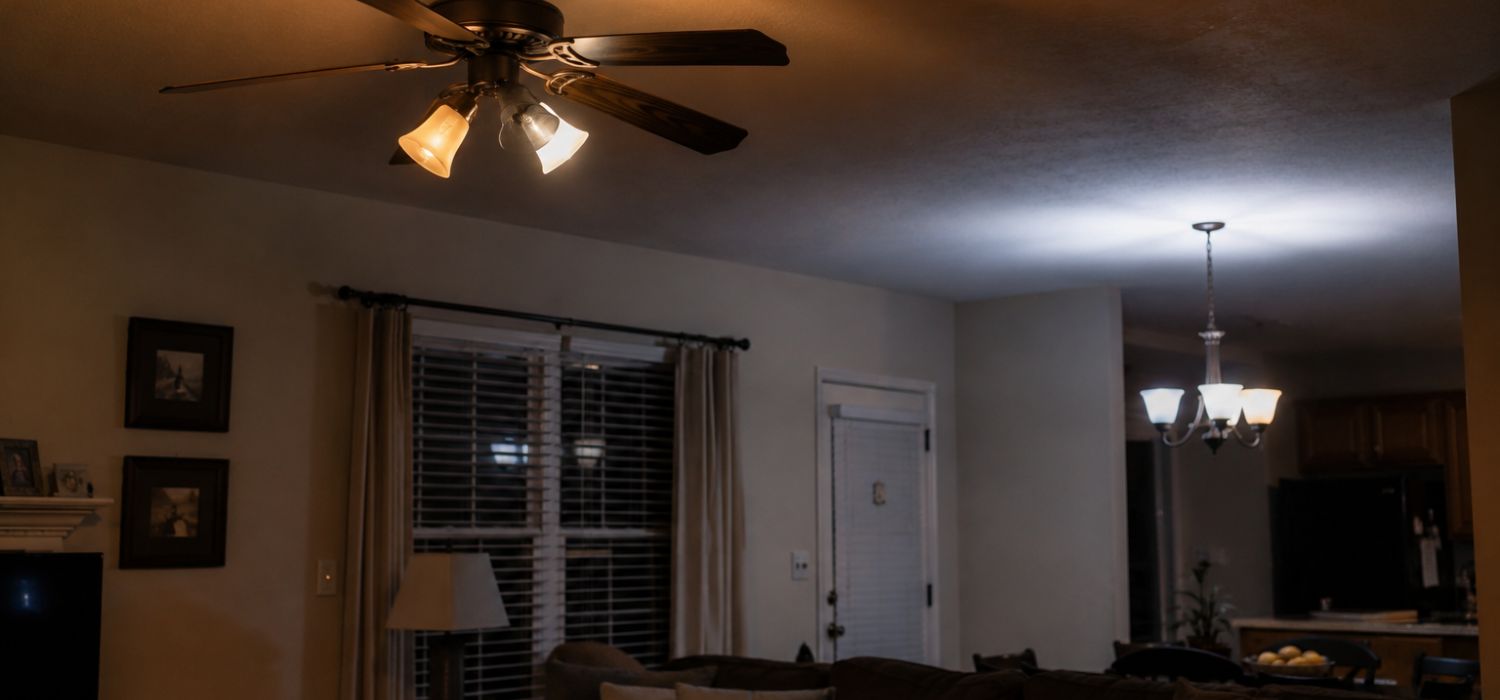
Are flickering lights and tripping breakers disrupting your home or business in or around Powell, TN? At Atomic Electric Service Inc., we know how frustrating that can feel, and we often find that loose wiring causes frequent flickers and can trip breakers. Keep reading to learn more about the common causes of flickering lights, why your breakers may keep tripping, and some troubleshooting you can try before contacting us for electrical repairs.
Flickering lights often signal problems with wiring or connections. Loose wires create erratic electrical flow, causing your lights to flicker unexpectedly.
Loose wiring can cause lights to dim or blink. We often see this in older homes and in buildings with do-it-yourself fixes. A loose connection raises resistance and heats the conductor. This can cause a breaker to keep tripping if the circuit overloads. Check junction boxes and outlets for loose screws and burn marks.
Call our licensed electricians if terminals look loose or scorched. We can help you troubleshoot electrical issues and secure connections to reduce hazards.
Overloaded circuits occur when too many devices draw power from one circuit. We notice lights flicker or dim as a result. Kitchens and workshops often strain circuits. Older homes and small businesses face this issue more often.
You can reduce the load by moving heavy appliances to other outlets, and when the system needs more support, you can have our team upgrade your panel or add new circuits. Clear breaker labels and safer cord use also help prevent overloads.
Electric breakers trip for several reasons. Faulty appliances often draw too much current, causing a breaker to trip. Short circuits and ground faults create dangers as well, leading your breaker to protect the system by switching off.
We often find that faulty appliances cause breakers to trip and lights to flicker. A failing motor or an overheating part can draw extra current. This can overload a circuit or create intermittent faults.
We recommend unplugging suspect devices and testing circuits individually. If a breaker trips repeatedly, call us for a full inspection. Faulty appliances frequently trigger breakers and should be checked promptly.
Faulty appliances can lead to more than just flickering lights. Short circuits and ground faults also contribute significantly to electrical issues in our homes or businesses. A short circuit occurs when a live wire comes into contact with another wire or a grounded surface. This causes an immediate surge of electricity, which can trip breakers or damage equipment.
Ground faults happen when current leaks from a wire into the grounding system. These situations pose serious safety risks, as they can lead to fires or electric shocks. You must inspect wiring regularly to avoid these hazards. In all, taking proactive measures helps ensure the safety and efficiency of your electrical systems.
When you face flickering lights or tripping breakers, start by checking the wiring and connections. Look for any loose ends that might cause problems. Testing and resetting breakers can also help identify issues. Keep a close eye on how your electrical system responds during this process.
We often find that inspecting wiring and connections can resolve flickering lights. This simple checklist can help to ensure everything functions well.
Test and reset breakers to address flickering lights. This process can help you identify faulty circuits and restore electricity.
Testing and resetting breakers play an essential role in maintaining safe electrical systems in our homes and properties.
Troubleshooting flickering lights and tripping breakers can feel overwhelming. You can tackle these issues by checking wiring, inspecting connections, and testing the breakers. Taking action now helps you maintain a safe environment in our homes or businesses. Don’t hesitate to contact us for help if problems persist. Our team can ensure your electrical system runs smoothly at your home or business in Powell, TN.
Loose wiring can cause flickering lights. Overloaded circuits or a weak connection at the electrical panel can also cause it.
Call an electrician if flickering or tripping happens often. Definitely call if you smell burning, see sparks, or feel unsure.
A circuit overload can make breakers trip. A short circuit or a failing circuit breaker can also cause a circuit breaker to trip.

Addresses:
2141 W Emory Rd STE 101 Powell, TN 37849
Phone: 865-409-2866
Business Hours:
Monday - Friday: 8:00 AM to 5:00 PM
Saturday - Sunday: Closed